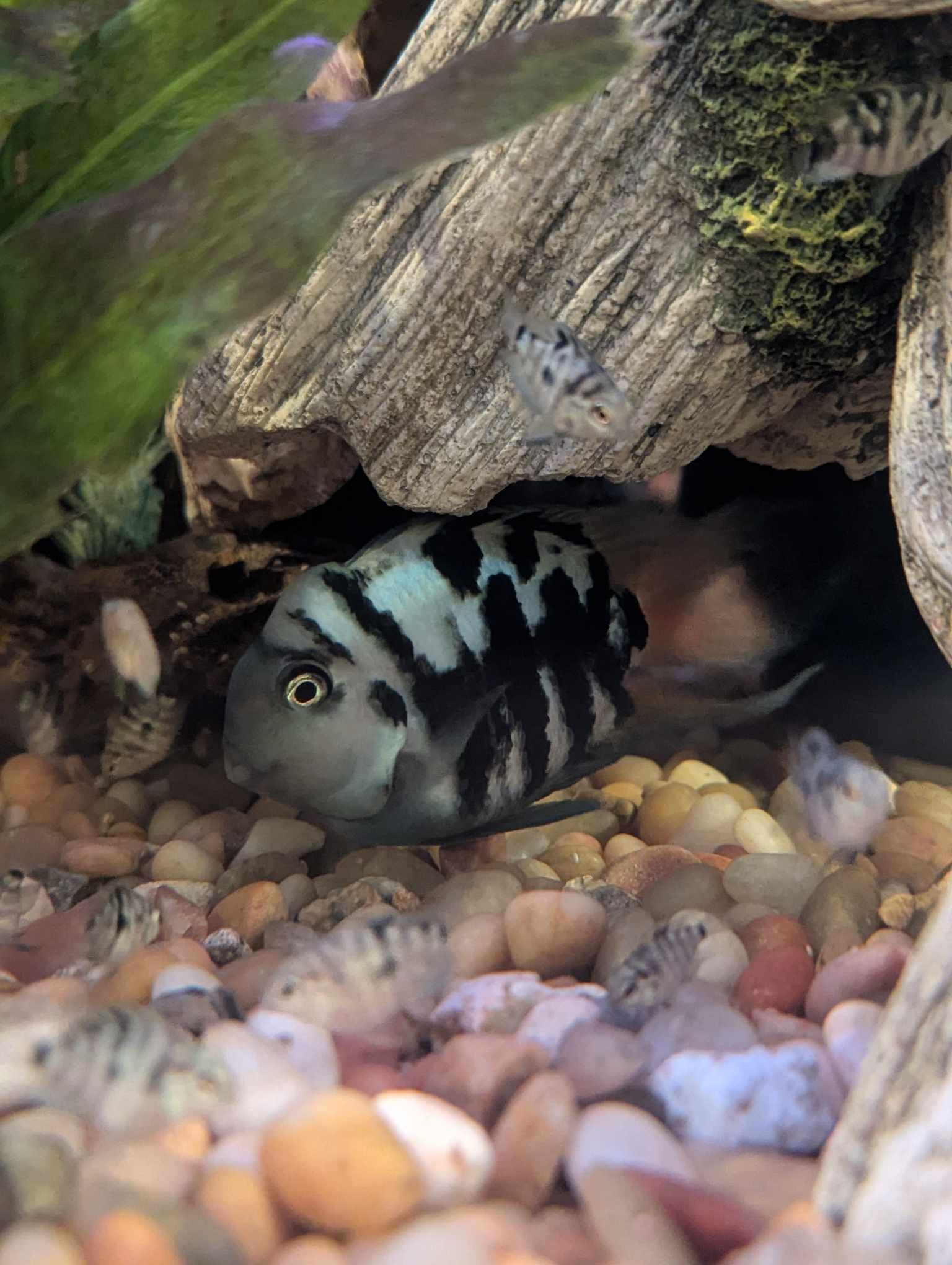
How they breed with eachother >>
When they breed with eachother >>
What they need to make that happen >>>
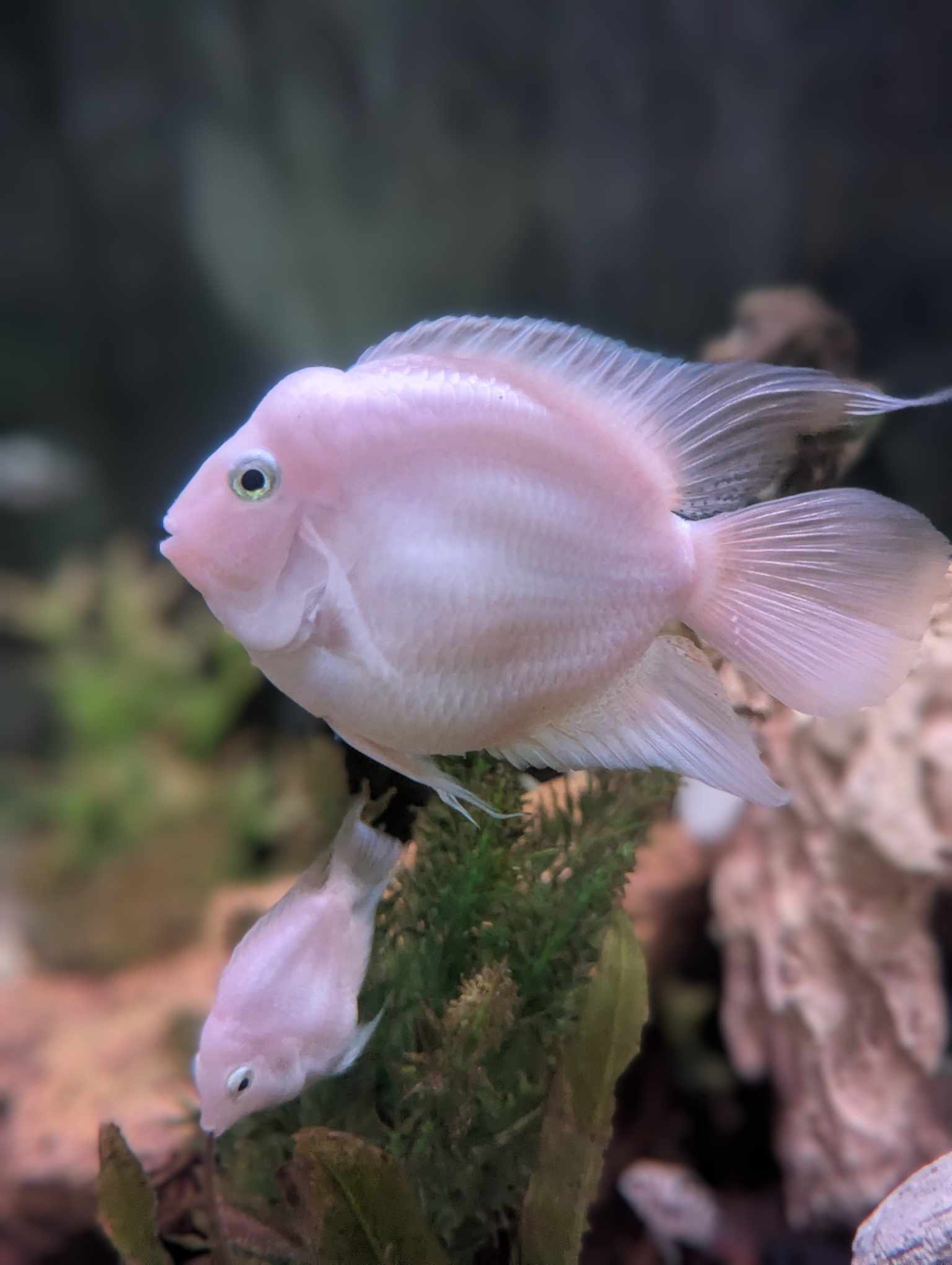 This fish exhibits unique breeding behavior and strong
parental care, ensuring high offspring survival rates and ease of rearing. The significant
sexual dimorphism facilitates easy sex identification during breeding. Adaptable to captive
conditions, it can reproduce 3–4 times annually, with fry displaying high survival rates. The
breeding process begins with mate selection, followed by the cleaning of a substrate where
the female lays eggs. Fertilized eggs remain attached to the substrate for two days before
hatching, after which fry begin swimming. Initially, fry fed by help of mother, later
transitioning to natural food and crushed supplemental feed consuming independently.
However live feed is the best for good growth and coloration. Fry demonstrate group
swimming behavior and collective feeding. A natural environment with adequate sunlight
further enhances its growth and development. Due to aesthetic appeal and high market
demand, polar blue parrot is highly valued in the ornamental fish industry. The Polar blue parrot is a continuous breeder,
reproducing year-round under suitable
conditions. They generally prefer a
temperature range of 23–28°C and slightly
acidic water for breeding. Their lifecycle
includes several stages, such as egg, spawn,
fry, and adult. Eggs hatch within 48–72 hours
of spawning, and after 2–3 days, the fry begins
swimming. During this phase, parents assist in
feeding until the fry can independently
consume food. Initially, crushed supplemental
feed or live feed, such as Artemia, can be
provided to promote growth and enhance
coloration. After 15–20 days, the fry become
independent, can be separated from the
parents, and can be fed with supplemental
feed.
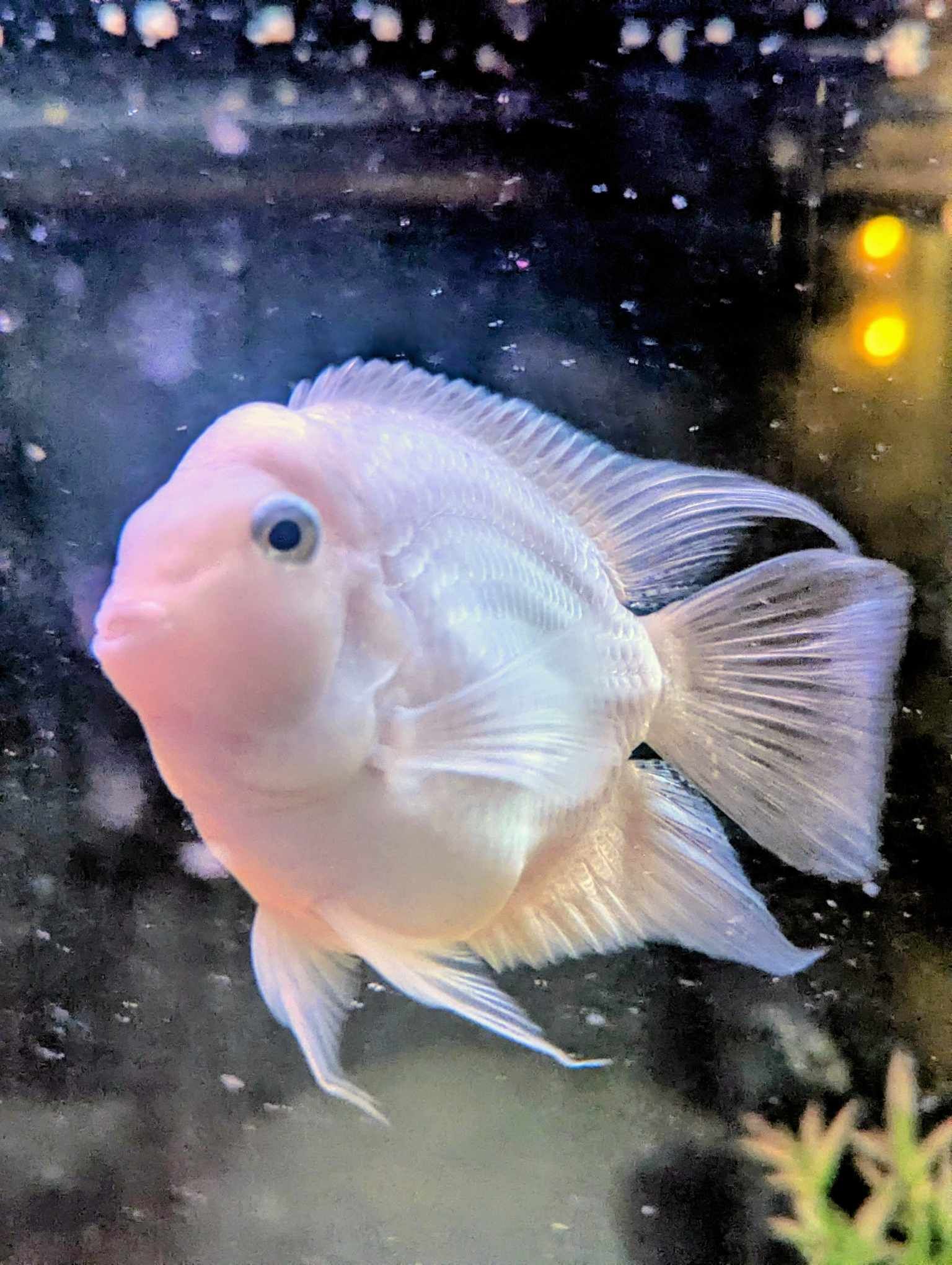
Polar blue parrot typically grows to a size of
4–6 inches and exhibit distinct sexual
dimorphism. Males are usually larger, with
pointed dorsal fins, while females have
rounded dorsal fins and a more rounded body
shape. Females also exhibit deeper coloration,
often developing a yellow or deep orange hue
in the abdominal region as they mature.
This fish exhibits unique breeding behavior and strong
parental care, ensuring high offspring survival rates and ease of rearing. The significant
sexual dimorphism facilitates easy sex identification during breeding. Adaptable to captive
conditions, it can reproduce 3–4 times annually, with fry displaying high survival rates. The
breeding process begins with mate selection, followed by the cleaning of a substrate where
the female lays eggs. Fertilized eggs remain attached to the substrate for two days before
hatching, after which fry begin swimming. Initially, fry fed by help of mother, later
transitioning to natural food and crushed supplemental feed consuming independently.
However live feed is the best for good growth and coloration. Fry demonstrate group
swimming behavior and collective feeding. A natural environment with adequate sunlight
further enhances its growth and development. Due to aesthetic appeal and high market
demand, polar blue parrot is highly valued in the ornamental fish industry. The Polar blue parrot is a continuous breeder,
reproducing year-round under suitable
conditions. They generally prefer a
temperature range of 23–28°C and slightly
acidic water for breeding. Their lifecycle
includes several stages, such as egg, spawn,
fry, and adult. Eggs hatch within 48–72 hours
of spawning, and after 2–3 days, the fry begins
swimming. During this phase, parents assist in
feeding until the fry can independently
consume food. Initially, crushed supplemental
feed or live feed, such as Artemia, can be
provided to promote growth and enhance
coloration. After 15–20 days, the fry become
independent, can be separated from the
parents, and can be fed with supplemental
feed.
Polar blue parrot typically grows to a size of
4–6 inches and exhibit distinct sexual
dimorphism. Males are usually larger, with
pointed dorsal fins, while females have
rounded dorsal fins and a more rounded body
shape. Females also exhibit deeper coloration,
often developing a yellow or deep orange hue
in the abdominal region as they mature.
Female polar blue parrot typically lay 100–300
eggs, depending on their age. They prefer soft
surfaces for spawning and attach the eggs to
the prepared area, where they remain for the
next few days. After spawning, both the male
and female take on the responsibility of
guarding the eggs. Fertilized eggs appear
transparent and take approximately 48–72
hours to hatch. As the fry begin to develop,
their movement gradually increases, with the
parents actively protecting them from other
fish in the tank.The newly hatched fry is very
small and stay in close groups near the female
for protection until they can swim
independently
They generally form pairs, which
helps to reduce stress and hostility. However,
some individuals may exhibit aggressive
behavior, particularly if there is a higher
proportion of males in the tank. Aggression
can be mitigated by providing addition
shelters, such as pipes, rocks, and pots.
Occasionally, polar parrots may display
cannibalistic tendencies and prey on smaller
fish; therefore, it is essential to provide them
with adequate and appropriate feeding.
Compatible tank mates are typically other
cichlid varieties, of equal sizes which are often
preferred. During the breeding phase, the
female begins cleaning the selected breeding-site, while the male assumes a protective role,
guarding the area and driving away any nearby
tank mates.